By Ernest Jagodziński
I cannot remember the first time I heard the word biochemistry.
What I do remember is the moment I realized that cooking is about far more than preparing food.
Every chef has experienced moments like these.
Why do two identical cuts of meat taste completely different after weeks of ageing? Why can a small amount of koji unlock flavors in vegetables that were previously hidden? Why does a broth simmered for twelve hours have an entirely different character from one cooked in four? Why does the same dish seem less salty when served just a few degrees warmer?
For many years, my answer was simple.
Because that’s how cooking works.
Today, I know that this is not an answer.
It is only the beginning of another question.
For generations, our profession has been built on knowledge passed from one chef to another. A master demonstrated a technique, and the apprentice repeated it until it became instinctive. That tradition remains one of the greatest strengths of our profession.
But gastronomy is entering a remarkable new era.
Never before have chefs had access to so much knowledge from biology, chemistry, microbiology and food science. Never before have restaurants collaborated so closely with scientists, producers, sensory specialists and researchers.
This does not mean that kitchens are becoming laboratories.
Quite the opposite.
It means that we are finally beginning to understand nature more deeply.
Because biochemistry does not only happen inside laboratories.
It happens every single day in our kitchens.
When meat ages.
When bread rises.
When vegetables ferment.
When stock simmers.
When onions caramelize.
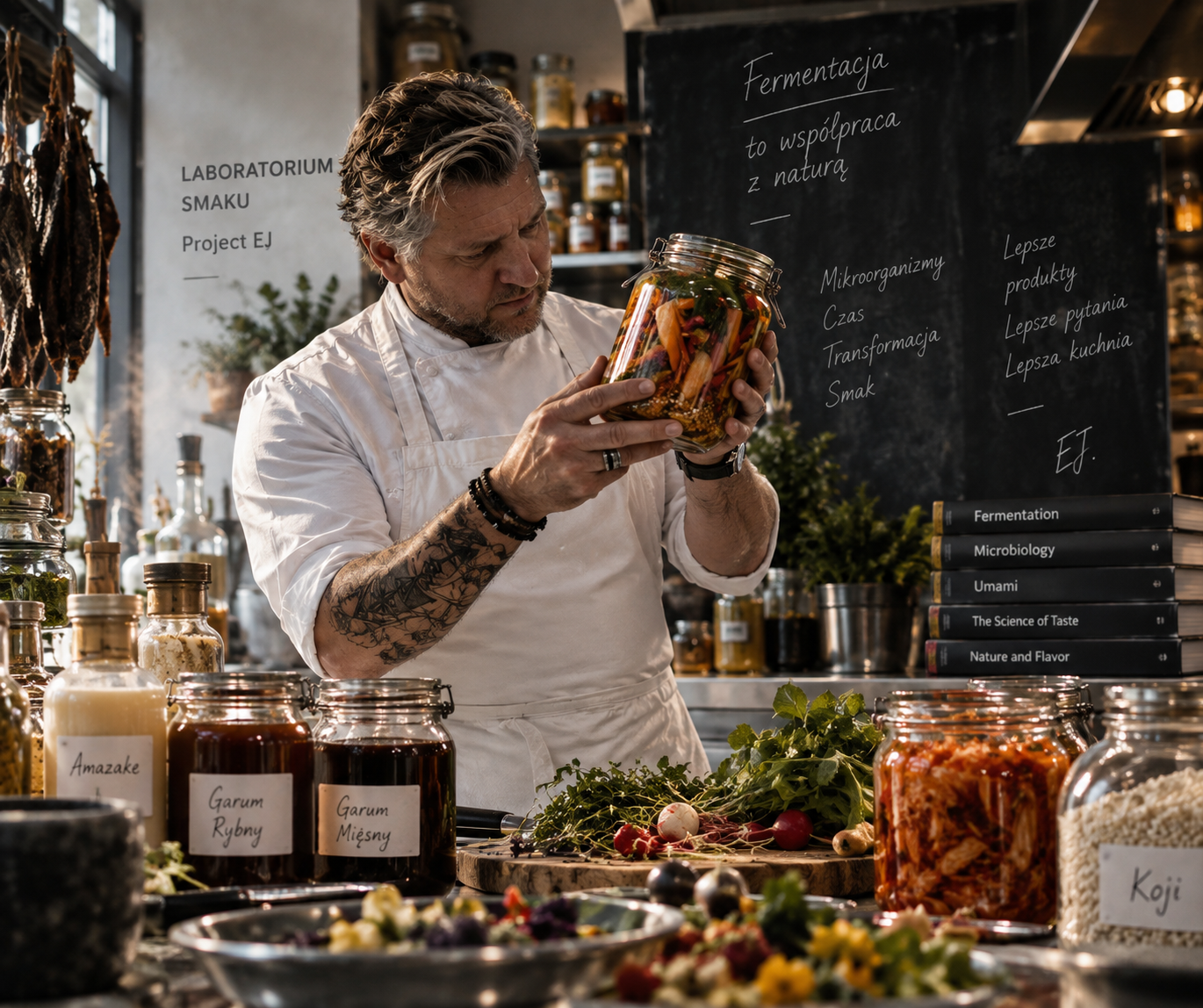
When we prepare miso, garum or koji.
Every one of these processes triggers thousands of biological and chemical reactions that remain invisible to the eye.
Yet they are responsible for everything we ultimately experience.
Flavor.
Aroma.
Texture.
Emotion.
The longer I work as a chef, the more convinced I become that the future of gastronomy will not be defined by increasingly complicated techniques.
It will be defined by a deeper understanding of simple ingredients.
Salt is perhaps the best example.
For thousands of years, it has been one of the chef’s most powerful tools. It seasons, preserves and balances flavor.
Yet today we increasingly ask ourselves whether the future of cooking should really depend on adding more sodium.
Perhaps we are asking the wrong question.
Perhaps we should not be searching for substitutes for salt.
Perhaps we should be learning to understand flavor itself.
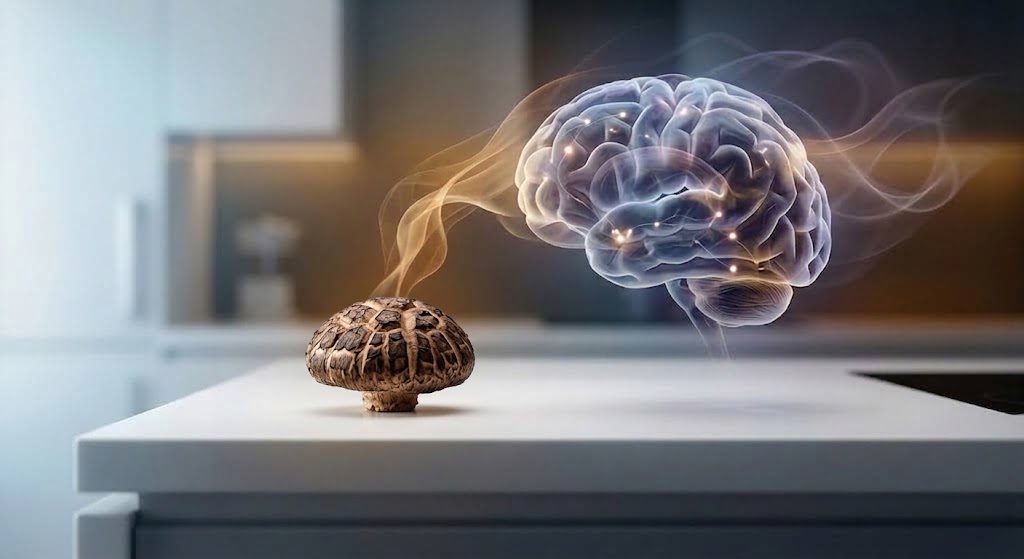
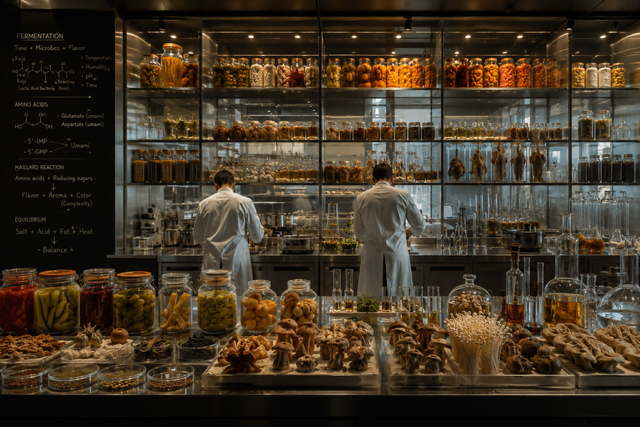
Fermentation, koji, garum, miso, aged cheeses, mushrooms and seaweeds demonstrate that nature has spent millions of years developing sophisticated ways of creating depth of flavor—not by increasing sodium, but by producing compounds responsible for umami, aroma and persistence.
This is where science stops being theory.
It becomes practice.
One of the most valuable lessons I have learned is that chefs should not fight nature.
We should learn to collaborate with it.
Enzymes are not simply tools.
They are partners.
Yeasts are not working for us.
They have been doing their work for millions of years.
Microorganisms are not a trend.
They are among the oldest flavor creators on Earth.
The better we understand them, the more thoughtfully we can use their potential.
This changes the questions we ask.
Instead of asking,
“How do I cook this dish?”
we begin asking,
“What is happening to this ingredient while I cook it?”
That subtle shift separates repetition from true creation.
So, should a 21st century chef understand biochemistry?
Not to become a scientist.
Not to replace intuition with formulas.
But to ask better questions.
Because every innovation begins with curiosity.
And every memorable dish begins with a question.
I believe the greatest transformation in gastronomy will not come from new equipment or new ingredients.
It will come from changing the way we look at food.
Not as a collection of ingredients.
But as a living ecosystem of processes that we are only beginning to understand.
Perhaps that is the true role of the modern chef.
Not simply to cook.
Not simply to feed.
But to discover.
The future of gastronomy will not belong to the chefs who know the most recipes. It will belong to those who never stop asking why?