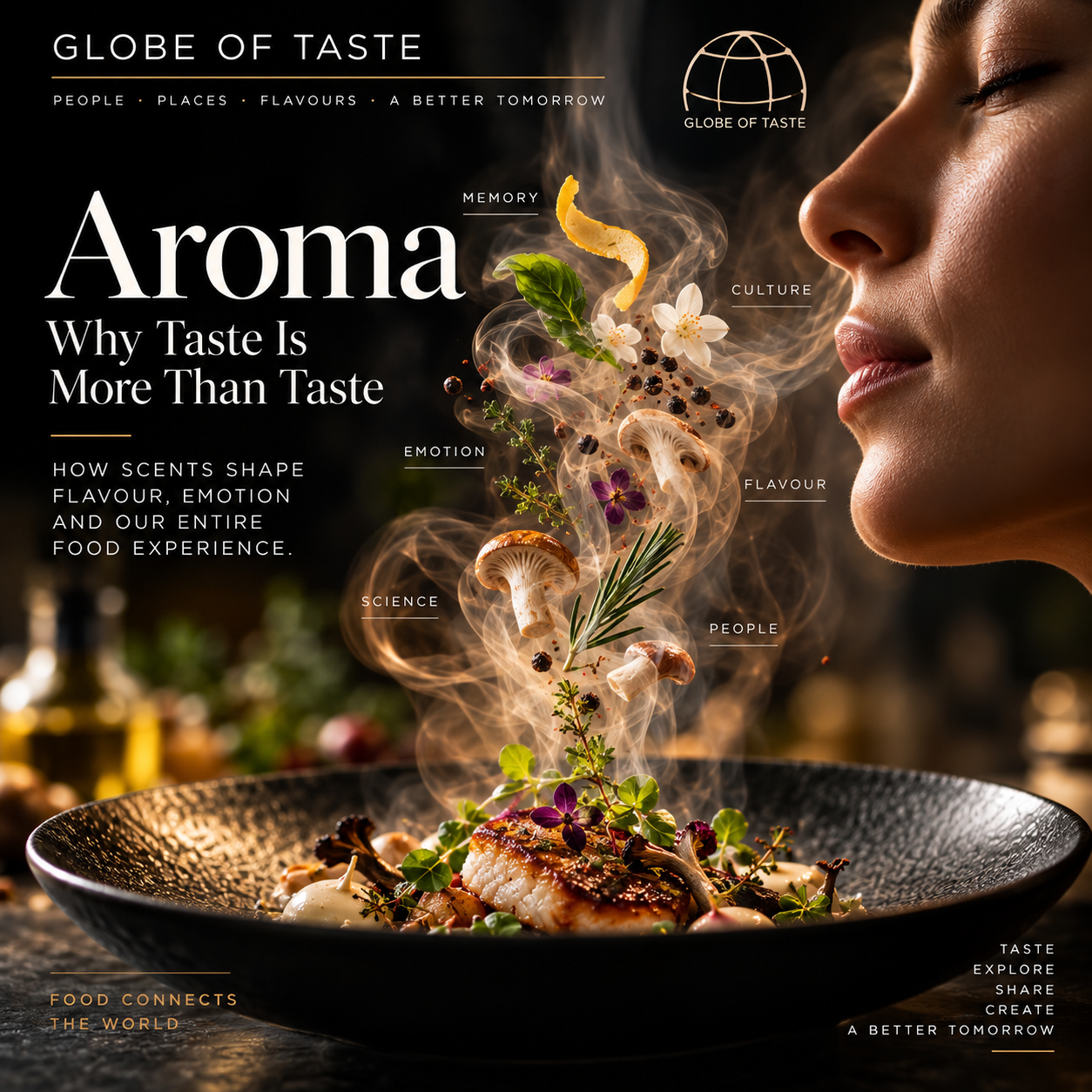
Aroma – Why Taste Is More Than Taste
There is a moment in cooking that happens long before we actually taste anything.
You walk into a kitchen and someone has just taken bread from the oven. Garlic and rosemary are frying in olive oil, coffee has just been ground, or a piece of meat has been placed on a hot grill. Nothing has touched your tongue yet, and nevertheless your brain has already begun to create an idea of what is about to come. Sometimes it is anticipation, sometimes memory, sometimes simply hunger, but the experience has already started.
As a chef, I find this fascinating because we spend so much of our professional lives talking about taste. We discuss sweetness and acidity, salt and bitterness, umami and balance, and of course all of these things matter. But when I think about the dishes I remember, the kitchens I have worked in and the food that has stayed with me over the years, very often the first thing that comes back is not a taste at all.
It is a smell.
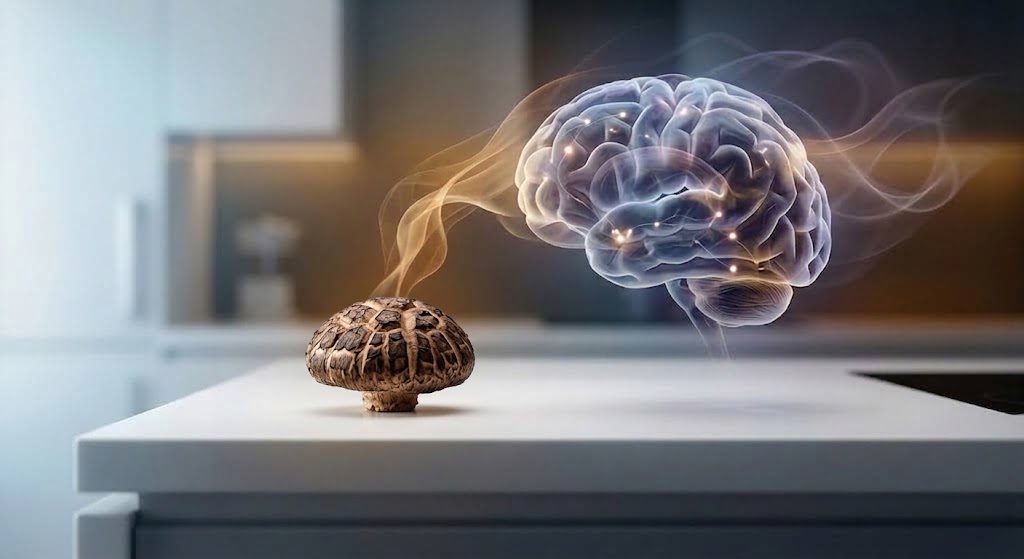
And perhaps that is because we smell before we taste.
What reaches our nose before the first bite begins to shape our expectations, and those expectations influence how we experience what follows. By the time the food reaches our mouth, we are no longer approaching it without an opinion. Our brain has already received information, compared it with previous experiences and begun to anticipate what this food might be like.
This continues once we start eating. What we casually call “taste” is actually a much more complex experience. Our tongue detects the basic tastes, but many of the characteristics that allow us to recognise coffee as coffee, strawberries as strawberries or roasted meat as roasted meat come from aromatic compounds that reach our olfactory system, including from the mouth while we chew. Anyone who has eaten with a heavy cold knows the effect: sweetness and saltiness may still be there, yet much of what makes the food recognisable and enjoyable suddenly seems to have disappeared.
For a chef, understanding this changes the way you think about a dish, because aroma is not something that simply happens at the end. We create it throughout the cooking process. We release it when we cut herbs, develop it when we roast or grill, transform it through fermentation and concentration, and change it again through temperature. Even the moment at which a dish reaches the table can make a difference, because a plate arriving with warm aromas rising from it creates a completely different first impression from the same food served without them.
But there is another part of aroma that I find even more interesting, and perhaps more human.
Smell carries memory.
Sometimes a single aroma can take us somewhere we haven’t thought about for years. It can bring back a kitchen from our childhood, a bakery we used to pass every morning, the smell of the sea, a barbecue with friends or a particular meal in a country we visited decades ago. We don’t consciously decide to remember these things; suddenly they are simply there.
This connection between smell, emotion and memory also has a biological basis, but as a chef I am less interested in reducing it to brain anatomy than in what it means when we cook for other people. We are never serving food to an empty memory. Every guest brings a lifetime of experiences to the table, which is why exactly the same aroma can feel comforting to one person, unfamiliar to another and perhaps even unpleasant to someone else.
Culture plays a role. Childhood plays a role. Experience plays a role.
And suddenly cooking becomes much bigger than combining ingredients correctly.
Over the years I have come to believe that when we create a dish, we are not only working with salt, acidity, sweetness, bitterness or umami. We are working with aroma and temperature, texture and expectation, memory and emotion, and somehow the human brain brings all of these things together into the experience we call flavour.
Perhaps this is also why technically perfect food is not always the food we remember.
There are dishes that may not have been the most complicated or sophisticated we have ever eaten, yet twenty years later we can still remember the smell of them. And there are other dishes that were technically flawless, beautifully presented and impressive in every measurable way, but a week later almost nothing remains.
For me, this is one of the most beautiful and difficult things about cooking. We can write a recipe down to the gram, specify the temperature to the degree and describe every individual step, but we can never completely prescribe what another person will experience when that first aroma reaches them.
So perhaps, before asking the question we chefs have asked thousands of times —
“How does it taste?”
— we should occasionally ask another one:
“What happens before the first bite?”
Because by the time we taste the food, the experience may already have begun.
Florian Schwarz
Globe of Taste