
By Dr. Yana Steudel
Brands invest heavily in creating memorable identities. They develop visual languages, distinctive architecture, carefully curated soundscapes, and compelling storytelling. Every element is designed to reinforce recognition, evoke emotion, and communicate values.
Yet one of the most powerful sensory experiences is rarely considered an explicit part of brand strategy: Taste.
The 10-Hour Drive: “What Does Happiness Taste Like?”
Years ago, a manager from a prominent Berlin restaurant called me with an ambitious challenge for their New Year’s Eve celebration:
“We want to give our guests a jar of flavor pearls that capture the taste of Happiness.”
Her initial suggestion was lemon—clean, universal, non-alcoholic. I rejected it immediately. Lemon? Lemon is safe. Lemon is predictable. Happiness—especially on a night of transition—demanded something far more complex.
I was driving through Austria at the time, with ten hours in the car ahead of me. As the miles rolled by, I dissected what that moment actually meant. New Year’s Eve stands for transition: a sharp reset, hope, and passion.
By the time I arrived in Berlin, the formulation was clear: cider vinegar for the sharp, cleansing reset of a fresh start, paired with chocolate and pepper for warmth, depth, and a lingering spark of passion.
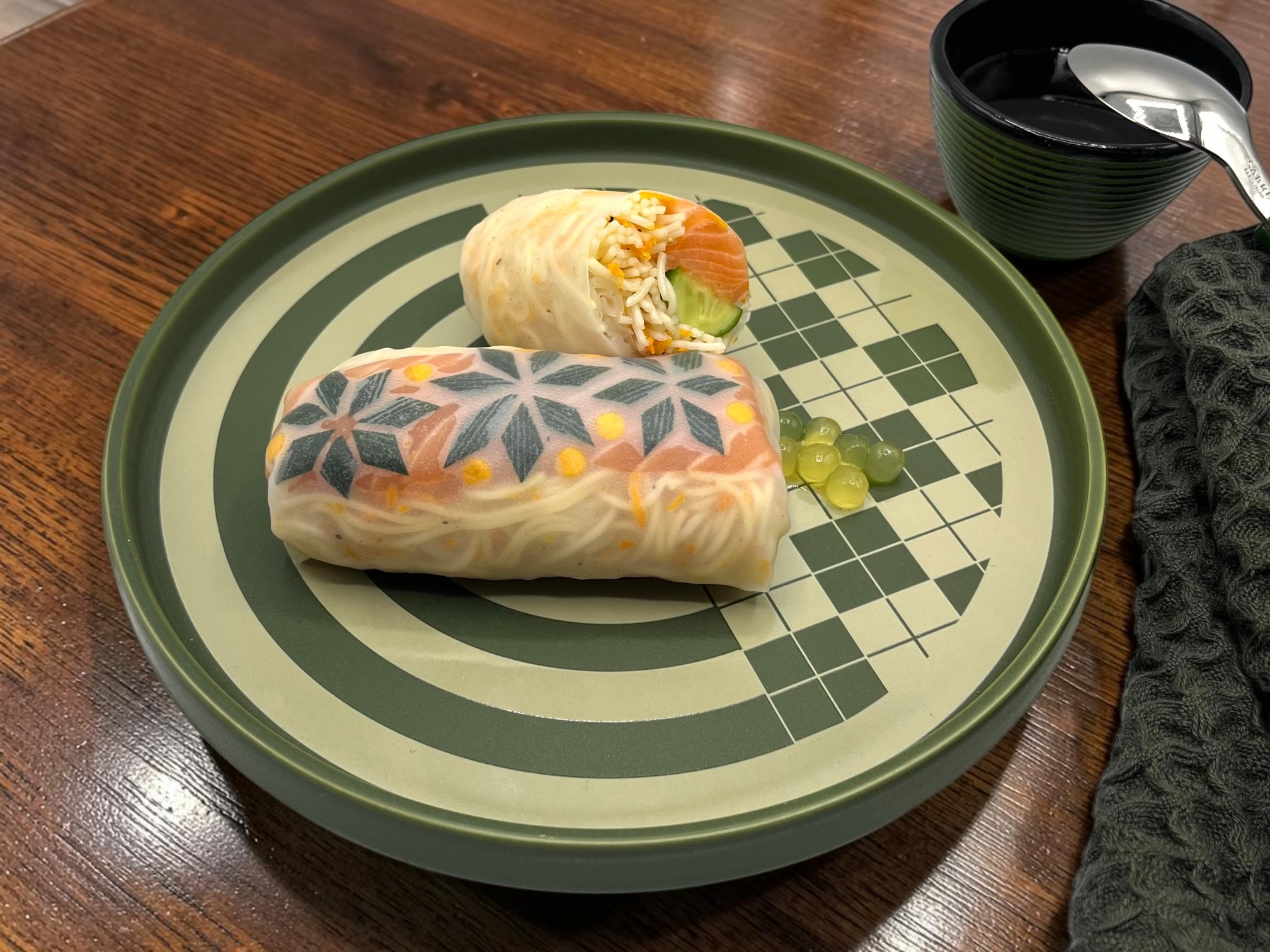
The result was a remarkably versatile flavor pearl—one that could elevate a rich savory dish, yet feel equally at home over a sweet dessert. It was an abstract emotion translated directly into taste.
The Trap of Crowdsourcing: Creating vs. Defining
When I began developing brand-focused flavor concepts, I used to ask colleagues from different countries: “What is the flavor of your country?” or “What flavor is associated with Hotel X?”
The answers were always fragmented. Regional biases, individual memories, and subjective preferences meant there was never a consensus.
That was the breakthrough realization: You don’t discover a brand’s taste by asking the public. The brand defines the taste it wants to represent—and builds that association through consistency.
Think of fragrance. Chanel No. 5 isn’t iconic because Chanel asked people what “elegance” smelled like; it became iconic because they defined a bold, specific profile and stood by it for decades until it burned itself into global memory.
What is the taste of BMW? I don’t know, even as a convinced BMW driver myself. And that is precisely the point. It is not for me—or a focus group—to decide. It is for the brand itself to define the taste that represents BMW or any other brand and then build that association over time.
Not a Signature Dish—A Signature Element
We understand why chefs or restaurants have signature dishes. That is their core business—their product lives on the plate. A signature dish is, however, mostly static.
For a hotel group, an airline, a lifestyle brand, or even a car brand, a signature element might be a true brand asset.
It can be a signature flavor, a specific ingredient, a pearl, a slice, a square, or a distinct bite—the physical format doesn’t matter. What matters is that it belongs to the brand’s touchpoints, not a kitchen menu. It lives in the arrival gesture, the executive lounge experience, the first-class boarding ritual, the parting gift at check-out, or the moment you welcome your brand-new car. The environments change, but the brand’s sensory anchor remains constant.
The Overlooked Frontier
If brand building is ultimately the art of creating meaningful, long-term differentiation, then taste deserves a permanent place alongside design, architecture, and sound.
Perhaps the question is no longer whether taste belongs to brand strategy.
Perhaps the question is why brand strategists have overlooked taste for so long.
So what is the taste of my own brand? A company that creates flavor tools has an obvious problem with that—we live in a world of infinite possibilities.
Funny enough, a non-food brand might have an easier decision to make.
An irony, isn’t it?
Nations have national flowers, national animals, colors, flags, and other symbols chosen to represent them. Why not flavors?
Hm, I admit, this is not quite so easy. A national flavor would have to feel as though it truly belongs to that country. I experienced this myself when creating Tasty Globes. Some countries have immediately recognizable flavor identities. Others simply don’t.
With brands, it is different. Brands define their own visual symbols, above all the logo.
Perhaps one day they will define their own corporate taste as well.
The eye sees the logo. The palate tastes the brand.