By Sandrine Morant
Gastronomy is not limited to flavor alone. It is a complete sensory experience in which sight plays a vital role even before the first bite. This creation perfectly illustrates the close relationship between the aesthetics of the plate, the design of the dish, and the perception of taste.
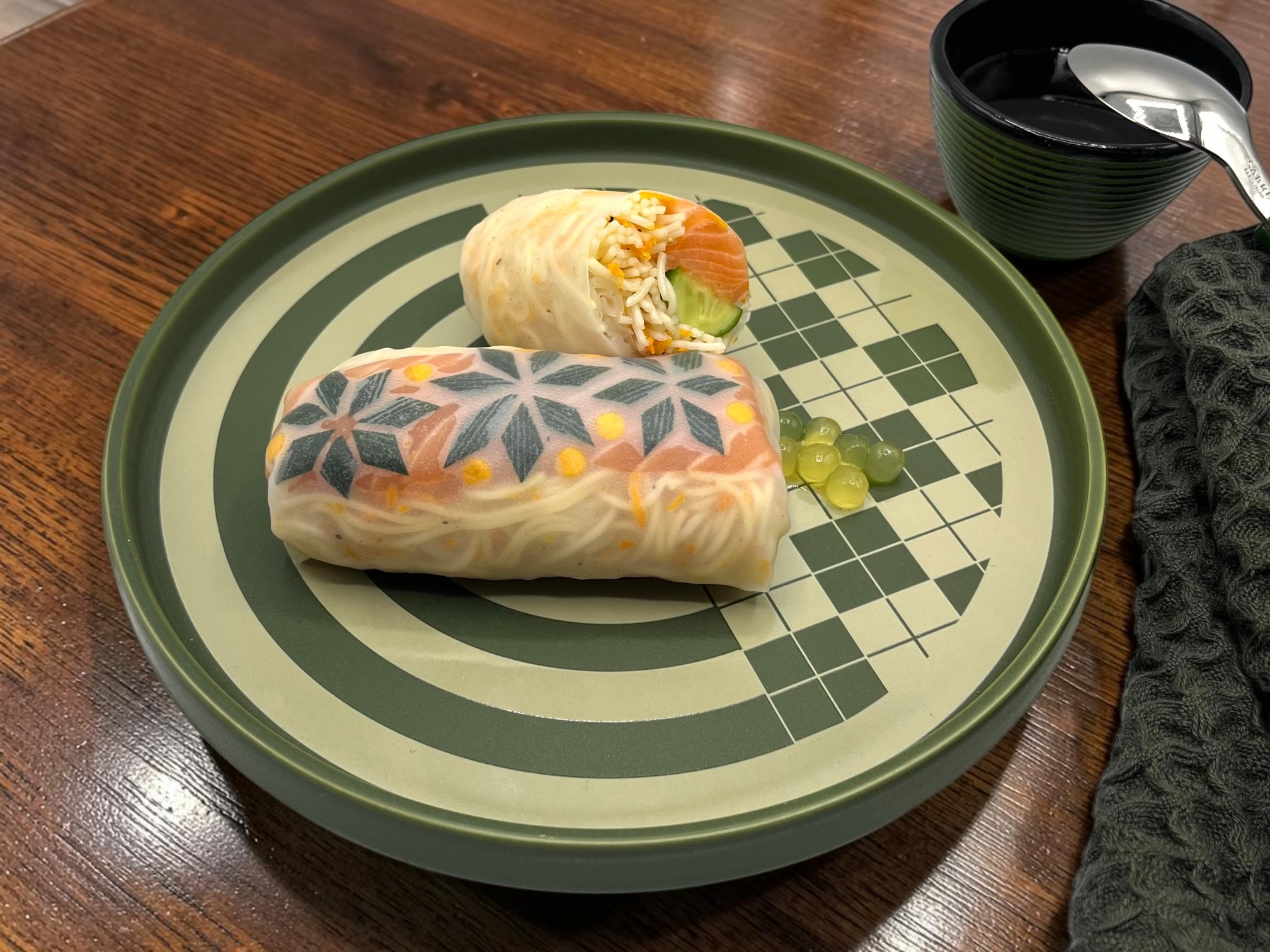
Here, fresh spring rolls are wrapped in rice paper decorated with geometric and floral patterns in black, yellow, and orange. This artistic choice transforms a traditional recipe into a culinary work of art, immediately capturing attention and arousing curiosity.
The presentation blends harmoniously with the plate, whose green graphic patterns create a subtle contrast with the colors of the dish. The combination of shapes, lines, and colors creates a visual balance that highlights the ingredients. Salmon, avocado, rice vermicelli, and vegetables remain visible through the translucent rice paper, offering a glimpse of their freshness and quality. This refined presentation stimulates the appetite and creates a positive expectation before the tasting even begins.
Taste and design are closely connected because our brains unconsciously associate the beauty of a dish with its expected quality and flavor. A carefully presented plate influences the diner’s expectations and can enhance the perception of taste. When colors are well balanced, textures remain visible, and plating is precise, the dining experience becomes more immersive. Pleasure begins with the eyes before continuing on the palate.
Finally, the choice of plate plays a fundamental role in the overall presentation. It is not merely a serving surface, but an essential design element that enhances the dish. By creating harmony between the plate and its contents, the chef tells a story, expresses creativity, and demonstrates that culinary art relies as much on visual emotion as on the balance of flavors.
In this way, aesthetics and taste become inseparable, working together to transform a meal into a memorable and meaningful gastronomic experience.