By Christoph Büchner
Culinary education is far more than learning cooking techniques. It describes the process through which people discover, understand, evaluate, and appreciate food. Our perception of what tastes “good,” “bad,” “modern,” or “old-fashioned” does not develop by chance.
It is shaped by the interaction of:
Family eating habits
Cultural traditions
School and professional education
Sensory experiences
Media and social networks
Gastronomic experiences
Personal memories and emotions
Taste is therefore not only biological but also culturally constructed.
The Key Factors of Culinary Education
1. Family Background and Childhood
The first taste experiences are formed at home. Children who are regularly exposed to fresh vegetables, herbs, and diverse preparations tend to develop a greater openness toward food.
Brussels sprouts are an excellent example. Many people associate them with the overcooked, sulfurous versions commonly served in the 1970s and 1980s. These memories continue to influence perceptions today.
2. Sensory Experiences
Culinary education is fundamentally shaped through the senses:
Sight
Smell
Taste
Touch
Sound
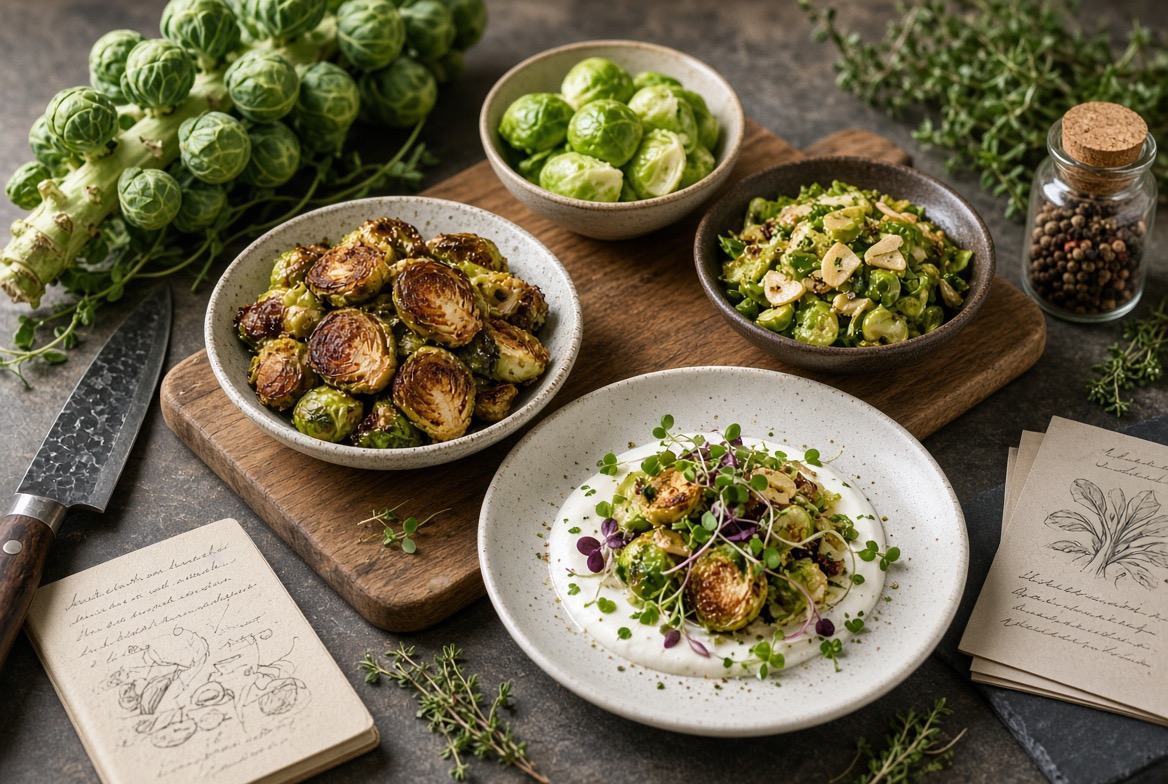
A caramelized Brussels sprout with rich roasted aromas creates a completely different experience from a soft, boiled Brussels sprout served in institutional catering.
3. Knowledge About Ingredients
People tend to appreciate food more when they understand its origin and characteristics.
Questions such as:
Where do Brussels sprouts grow?
When are they in season?
What varieties exist?
What nutritional benefits do they offer?
often lead to a more positive perception of the ingredient.
4. Social and Cultural Trends
Media have a tremendous influence on taste and food preferences.
An ingredient can transform from a humble staple into a culinary trend within just a few years.
Kale, parsnips, and pointed cabbage have all been rediscovered through gastronomy, food blogs, and social media. Brussels sprouts are undergoing a similar transformation, particularly through modern techniques such as fermentation, grilling, and plant-based cuisine.
—
How a “Collage of Images” Shapes Our View of Brussels Sprouts
The concept of a collage image can be understood as a collection of impressions that together form our perception of a food item.
Our perception of an ingredient is built from multiple overlapping images:
Childhood memories
Family narratives
School meals
Restaurant experiences
Cooking shows
Social media content
Food photography
Packaging and product design
Brussels sprouts are particularly interesting because their image was negative for decades.
The traditional image often included associations such as:
Bitter
Overcooked
A vegetable children were forced to eat
Old-fashioned home cooking
Today, however, a new image is emerging:
Seasonal
Regional
Sustainable
Nutritious
Versatile
Gastronomically exciting
The images that dominate our collective perception often determine our willingness to try and appreciate a product.
—
How Different Educational Institutions Could Approach the Topic of Brussels Sprouts
Primary School
Objective
To inspire curiosity.
Approaches
Growing Brussels sprouts in school gardens
Comparing different vegetables
Conducting tasting sessions
Exploring flavors through play and discovery
Impact
Children learn to see Brussels sprouts first as a living plant rather than as an unpopular side dish.
—
Secondary School
Objective
To develop an understanding of nutrition and food origins.
Approaches
Creating seasonal food calendars
Learning about regional agriculture
Participating in cooking projects
Comparing different cooking methods
Example
Students taste Brussels sprouts that are boiled, steamed, roasted, and fried.
This helps them understand how preparation techniques significantly influence flavor.
—
Culinary and Hospitality Vocational Schools
Objective
To develop technical and sensory expertise.
Approaches
Analyzing bitterness and flavor compounds
Comparing cooking techniques
Exploring food pairings
Creating modern menu concepts
Example
Pairing Brussels sprouts with:
Hazelnuts
Miso
Bacon
Citrus fruits
Brown butter
In this context, a seemingly simple vegetable becomes a creative culinary ingredient.
—
Hotel Management Schools and Culinary Academies
Objective
To connect ingredient knowledge with guest expectations and market trends.
Key Questions
Why do some guests reject Brussels sprouts?
How does language influence perception?
How does presentation affect purchasing decisions?
Practical Example
A dish described as:
“Roasted Winter Brassicas with Hazelnut and Miso”
may be perceived differently than:
“Brussels Sprouts Side Dish.”
—
Universities of Nutrition and Food Sciences
Objective
To examine the topic from a scientific perspective.
Areas of Study
Sensory science
Consumer psychology
Eating behavior
Food design
Researchers may investigate how imagery, language, and presentation affect consumer acceptance of Brussels sprouts.
Culinary education emerges from a complex interaction of experience, knowledge, culture, and emotion. Food is not judged solely by its flavor but also by the stories, memories, and images associated with it.
Brussels sprouts provide an outstanding example of this phenomenon. Few vegetables demonstrate as clearly how strongly perception is shaped by a collective culinary image. Educational institutions at every level can contribute to reshaping that image, transforming Brussels sprouts from a disliked childhood vegetable into a versatile, regional, and contemporary ingredient.
This is the essential task of modern culinary education: not only to teach taste, but also to broaden perspectives on food.