By Christoph Büchner
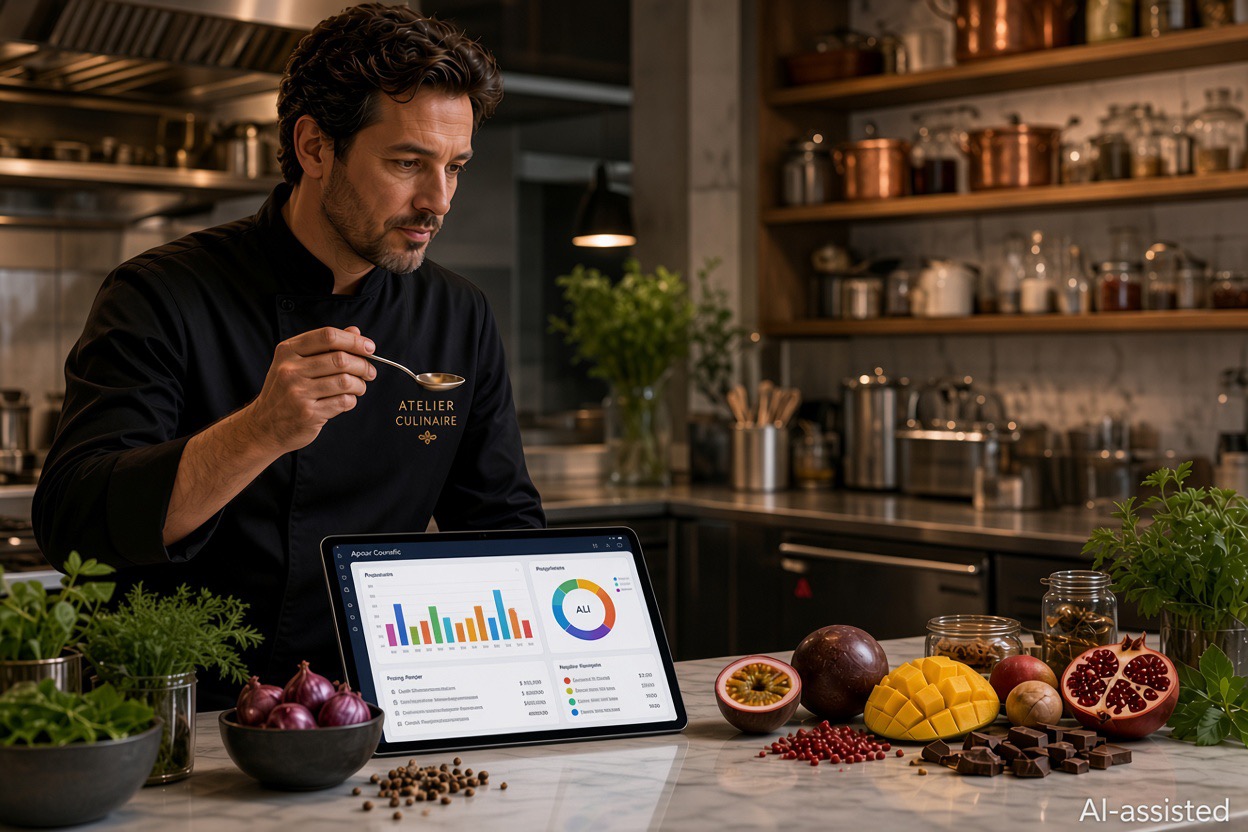
The world of gastronomy thrives on craftsmanship, experience and creativity. Yet artificial intelligence is increasingly becoming a tool that can support chefs and flavour experts. It does not replace talent or sensory sensitivity, but it does open up new opportunities for innovation and learning.
New Approaches to Flavour
AI can analyse vast amounts of data on flavours, ingredients and recipes. This reveals unusual combinations that people would often not immediately recognise. This gives rise to new ideas for dishes, products and culinary concepts.
At the same time, AI helps to develop recipes in a more targeted way. Instead of carrying out numerous trials, variations can be tested and evaluated digitally. This saves time and creates scope for creativity.
Personalised enjoyment
Everyone perceives taste differently. AI can take individual preferences into account and provide suitable recommendations. In future, menus, meal plans or set menus could be tailored more closely to individual guests.
This creates an opportunity to better combine enjoyment with personal needs.
A new approach to culinary education
The potential is particularly great in initial and continuing training. Knowledge on food products, cooking techniques, sensory analysis and cost calculation can be accessed at any time. Learners receive quick answers and can explore topics in greater depth according to their level of knowledge.
AI also offers support in the field of sensory analysis. Taste, texture and flavours can be described and documented in a more structured way. This makes the common language of culinary enjoyment easier to understand.
People and Machines as a Team
Despite all these possibilities, taste remains something profoundly human. AI can analyse, compare and make suggestions. However, it cannot replace emotions, hospitality or cultural significance.
The future therefore lies in the combination of technology and craftsmanship. AI provides knowledge and inspiration, whilst people use this to create special culinary experiences.
Conclusion
Artificial intelligence will not replace the culinary world, but rather expand it. It helps to discover new flavour ideas, facilitates learning and makes knowledge accessible. Those who combine craftsmanship and technology in a meaningful way can strengthen culinary education and reshape the world of taste.